

How Much Does Ford Transit Cargo Van Maintenance Cost?
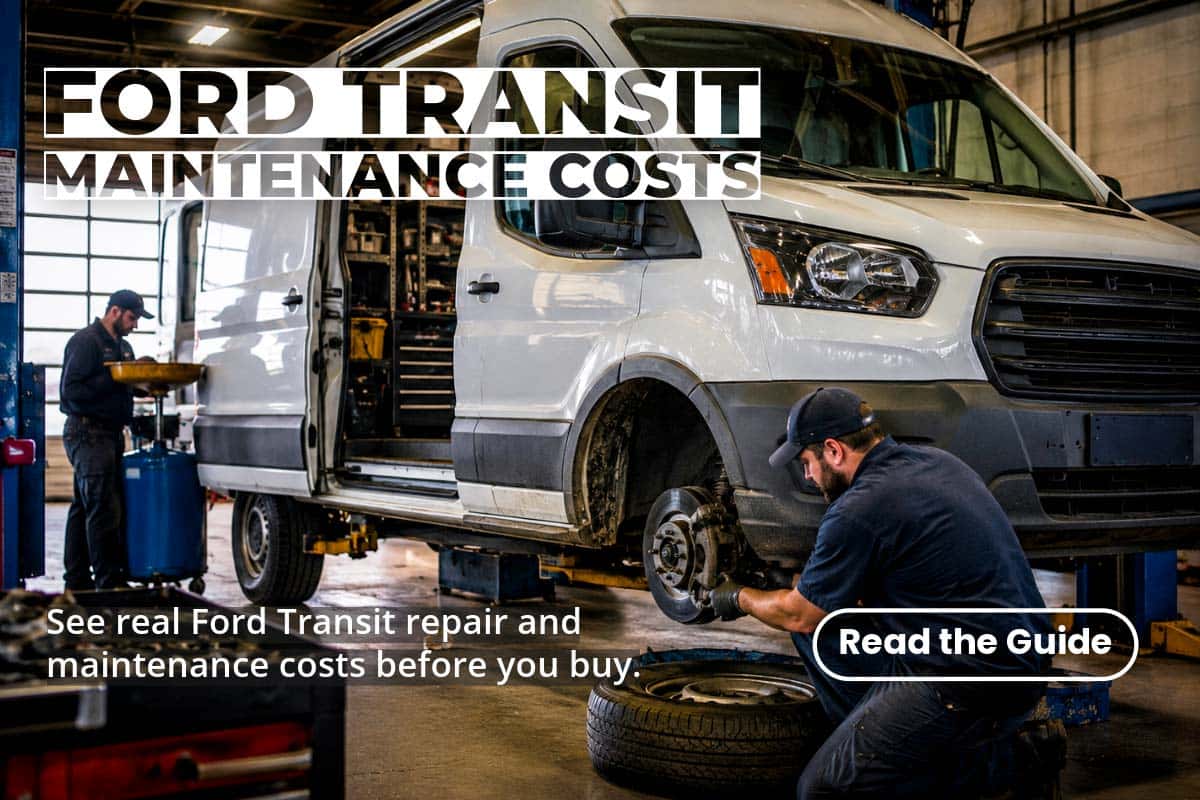
Running a Ford Transit Cargo Van is a lot like running a small business engine on wheels. Whether you use it for deliveries, plumbing, electrical work, HVAC service, mobile detailing, or camper van life, one thing becomes clear fast: maintenance costs matter. A Ford Transit can be incredibly dependable, but if you ignore service intervals or underestimate ownership costs, small issues can snowball into expensive downtime.
The good news? Compared to many European commercial vans, the Ford Transit’s maintenance costs are usually more manageable and predictable. Parts availability is strong across the United States, service centers are widespread, and repair costs tend to stay lower than those of competitors like the Mercedes-Benz Sprinter. Still, ownership expenses vary heavily depending on mileage, engine type, payload demands, and how aggressively the van is used.
Recent RepairPal maintenance data shows the average annual maintenance and repair cost for a Ford Transit-250 is around $947, placing it in the moderate ownership-cost category for commercial vans. That number may sound reasonable at first glance, but commercial vehicles rarely live easy lives. Heavy cargo, stop-and-go traffic, towing, long idle times, and fleet usage can push real-world costs much higher.
Before buying a Transit or budgeting for fleet operations, it helps to understand exactly where the money goes.
Understanding Ford Transit Ownership Costs
Owning a commercial cargo van is completely different from owning a normal passenger vehicle. A commuter sedan may travel 12,000 miles per year under relatively light conditions. A Ford Transit, on the other hand, often lives a much harder life. It may idle for hours, haul heavy equipment, drive through dense city traffic daily, or accumulate 40,000 to 60,000 miles annually. That kind of workload dramatically changes maintenance expectations.
This is why many business owners underestimate the true cost of commercial van ownership. They look at the purchase price but ignore operational wear. The heavier the van works, the more quickly brakes, suspension components, tires, wheel bearings, and fluids deteriorate. Imagine a marathon runner carrying a backpack full of bricks every day. That is essentially what happens to a heavily loaded cargo van.
The Ford Transit is generally considered more affordable to maintain than premium European work vans. According to RepairPal, the Transit-250 averages $947 in annual maintenance and repair costs. Still, annual costs can range from $700 to over $3,000 depending on how the van is used. A lightly driven electrician’s van may stay on the lower side, while delivery fleets operating in urban stop-and-go traffic often face higher wear rates.
Another major factor is preventive maintenance. Owners who follow Ford’s recommended service schedule usually avoid catastrophic repairs. Skipping oil changes, delaying brake service, or ignoring transmission fluid maintenance can quickly turn manageable costs into multi-thousand-dollar repairs.
Average Ford Transit Maintenance Cost Per Year
Most Ford Transit owners should realistically budget between $1,000 and $2,500 annually for maintenance and basic repairs. This includes routine services such as oil changes, tire rotations, brake replacements, filter replacements, inspections, and occasional mechanical repairs. Commercial usage can push that number significantly higher.
Here’s a realistic breakdown of average yearly costs:
| Maintenance Item | Average Annual Cost |
|---|---|
| Oil Changes | $350–$700 |
| Tire Replacement | $800–$1,600 |
| Brake Service | $400–$1,200 |
| Fluid Services | $200–$500 |
| Battery Replacement | $150–$350 |
| Miscellaneous Repairs | $300–$1,500 |
One reason the Transit remains popular among contractors and fleet operators is predictability. Many repair shops already know the platform well, parts are relatively available, and service costs are generally easier to forecast than those of luxury commercial vans.
Mileage plays a massive role in total ownership cost. A Transit with 30,000 miles annually naturally consumes more tires, brakes, and fluids than one driven 10,000 miles. Urban routes also increase maintenance frequency because stop-and-go driving places a heavier strain on braking systems and transmissions.
Long-term ownership costs rise noticeably after the 100,000-mile mark. Suspension wear, turbocharger maintenance on EcoBoost engines, cooling system repairs, and transmission servicing become more common. This doesn’t necessarily make the Transit unreliable. It simply reflects the reality of heavy commercial use.
According to Ford maintenance schedules, several inspections and service items repeat every 15,000 miles, while major replacements, such as belts and coolant, occur at much higher mileage thresholds.
Ford Transit Oil Change Costs
Oil changes are the lifeblood of the Ford Transit. Skip them, and the engine will remind you later with expensive consequences.
Recent RepairPal estimates show a Ford Transit-250 oil change typically costs between $175 and $204. For Transit-150 models, oil changes generally range between $170 and $199. Commercial owners often perform oil changes more frequently than casual drivers because heavy-duty operation accelerates oil breakdown.
Many Transit vans use synthetic oil, especially models equipped with the 3.5L EcoBoost engine. Synthetic oil costs more upfront but provides better heat resistance and protection under demanding conditions. That matters for vans hauling cargo in hot weather or towing equipment regularly.
The challenge with work vans is the time spent idling. Even when the van isn’t moving, the engine may continue running during deliveries or jobsite operations. This increases wear while adding relatively few miles to the odometer. Smart fleet operators track engine hours instead of relying solely on mileage.
Typical oil change intervals range from 5,000 to 10,000 miles, depending on usage patterns. Drivers operating under severe conditions often benefit from shorter intervals. Spending a few hundred dollars annually on oil service is far cheaper than replacing turbochargers or rebuilding an engine later.
Many owners also combine oil changes with inspections. Technicians can spot leaks, uneven tire wear, suspension damage, or brake issues early. That proactive approach often saves thousands over the long run.
Brake Maintenance and Replacement Costs
Brakes on a Ford Transit work incredibly hard. These vans are large and heavy, often fully loaded with tools, packages, or equipment. Every stop creates enormous friction and heat.
A heavily loaded Transit can burn through front brake pads surprisingly fast, especially in city driving. Delivery drivers and urban fleets may need brake service every 25,000 to 40,000 miles.
Highway-driven vans usually last much longer because they experience fewer aggressive braking cycles.
Brake replacement costs vary depending on whether you replace only pads or complete pads-and-rotors assemblies.
| Brake Service | Typical Cost |
|---|---|
| Front Brake Pads | $300–$500 |
| Front Pads + Rotors | $600–$1,000 |
| Rear Brakes | $400–$900 |
| Full Brake Job | $1,200–$2,000 |
Some dealership specials advertise brake services starting around $160–$200 for certain components, though heavy-duty commercial applications often cost more.
Brake wear increases dramatically with payload weight. Contractors carrying heavy shelving, generators, ladders, or construction tools place more stress on the braking system than lightly loaded vans. Terrain matters too. Mountain driving destroys brakes much faster than flat interstate cruising.
Ignoring brake maintenance creates a dangerous domino effect. Worn pads damage rotors, overheated rotors damage calipers, and failing components increase stopping distances. Preventive brake servicing is one of the smartest investments Transit owners can make.
Tire Costs for Ford Transit Cargo Vans
Tires are one of the biggest ongoing expenses for Ford Transit owners. Commercial vans are tire-eating machines when used aggressively.
A full set of quality commercial-grade tires typically costs between $800 and $1,600, depending on wheel size, load rating, and tire brand. High-roof and extended-wheelbase Transits usually require more expensive heavy-duty tires capable of supporting greater payload capacity.
Fleet operators often underestimate how quickly tires wear on work vans. Frequent cornering, uneven cargo distribution, poor alignment, and stop-and-go traffic all accelerate wear patterns. A Transit running overloaded every day can destroy tires far faster than expected.
Real-world Transit owner reports show tire replacement becoming a recurring major expense as vehicles age and mileage increases. One Transit owner documented multiple tire replacements and brake jobs over 100,000 miles as a major portion of operating costs.
Proper tire maintenance makes a huge difference. Regular rotations, alignment checks, and correct tire pressure can significantly extend tire life. Underinflated tires create excess heat buildup, while overinflation causes uneven center wear.
Think of tires like work boots for your business. Cheap boots wear out quickly, making every step harder. Quality commercial tires improve handling, fuel economy, braking performance, and overall reliability.
Transmission Service and Repair Costs
Transmission repairs are among the most feared expenses for any commercial van owner. The Ford Transit transmission is generally solid when maintained properly, but neglect can become expensive fast.
Transmission fluid service usually costs between $250 and $500, while a complete transmission replacement can cost $4,000 to $7,000, depending on the model and labor rates.
The Transit’s automatic transmission experiences tremendous stress under commercial use. Constant acceleration, towing, heavy payloads, and urban stop-and-go driving create heat, which is the enemy of transmission longevity.
Some owners mistakenly believe transmission fluid lasts forever because modern vehicles are marketed as having “lifetime fluids.” In reality, severe-duty commercial operation often requires earlier servicing. Preventive fluid changes can dramatically extend transmission life.
Warning signs of transmission problems include:
- Delayed shifting
- Hard gear changes
- Slipping between gears
- Burning smells
- Shuddering under acceleration
- Transmission overheating warnings
Ignoring these symptoms is like ignoring chest pain during a marathon. The issue rarely fixes itself.
Recent consumer reports for newer Transit models mention occasional transmission-related complaints, though experiences vary widely. Most long-term owners who follow service schedules report far fewer catastrophic failures.
Ford Transit Engine Maintenance Costs
The Ford Transit offers multiple engine options, and maintenance costs vary significantly between them.
The naturally aspirated V6 engine is generally cheaper to maintain because it lacks turbochargers. The 3.5L EcoBoost, however, delivers more power and towing capability but introduces additional complexity.
Turbocharged engines operate under higher temperatures and pressures. That means oil quality and maintenance intervals become even more critical. Neglected oil service can dramatically shorten turbo life.
Common engine-related maintenance items include:
| Engine Service | Typical Cost |
|---|---|
| Spark Plug Replacement | $250–$600 |
| Coolant Flush | $150–$300 |
| Air Filter Replacement | $40–$120 |
| Serpentine Belt Replacement | $150–$400 |
| Fuel System Cleaning | $150–$350 |
Ford’s official maintenance schedule recommends belt inspections and major coolant intervals at higher mileage thresholds.
EcoBoost engines reward owners who stay disciplined with maintenance. Clean oil, proper cooling system care, and quality fuel matter more with turbocharged setups. Owners who ignore maintenance often face carbon buildup, turbo wear, or cooling issues later.
Still, many Transit owners report excellent reliability beyond 100,000 miles with regular servicing.
Maintenance Schedule for Ford Transit Vans
Following the maintenance schedule is the easiest way to control long-term costs.
Ford recommends recurring inspections and services throughout the van’s lifespan, including:
| Mileage Interval | Recommended Service |
|---|---|
| Every 5,000–10,000 Miles | Oil Change |
| Every 15,000 Miles | Multi-Point Inspection |
| Every 30,000 Miles | Air Filter, Brake Inspection |
| Every 60,000 Miles | Transmission Service |
| Every 100,000+ Miles | Major Fluid & Belt Services |
Official Ford maintenance documentation notes several recurring inspection intervals every 15,000 miles and major replacement intervals at significantly higher mileage thresholds.
Commercial operators often shorten intervals because severe-duty driving accelerates wear. City delivery fleets, for example, frequently service vehicles more aggressively than Ford’s baseline schedule.
Preventive maintenance may feel expensive in the moment, but reactive repairs are almost always worse. A $250 fluid service today can prevent a $6,000 repair tomorrow.
Ford Transit Reliability Compared to Competitors
The Ford Transit sits in an interesting position within the commercial van market. It usually costs more to maintain than a basic pickup truck, but significantly less than many European commercial vans.
Transit vs Sprinter Maintenance Costs
Mercedes-Benz Sprinter vans are known for expensive parts and specialized service requirements. Many owners report significantly higher repair bills compared to Ford Transit models. Transit maintenance generally remains more affordable because Ford dealerships and aftermarket parts are easier to find across the U.S.
Transit vs Ram ProMaster Costs
The Ram ProMaster may offer slightly lower upfront maintenance expenses, though comparing overall ProMaster costs can reveal important differences in long-term ownership costs. However, long-term reliability remains a common discussion point among commercial owners.
Many fleet managers prefer the Ford Transit because of its broader service network and proven engine options. At the same time, many commercial owners continue to evaluate ProMaster reliability when comparing long-term durability, maintenance demands, and overall service expectations.
The Transit’s widespread popularity also creates clear advantages when it comes to parts availability, repair pricing, and mechanic familiarity. When a work vehicle goes down, fast access to service and replacement parts can be just as important as the repair cost itself.
Fleet Maintenance vs Personal Ownership
Fleet ownership changes the maintenance equation entirely.
Businesses operating multiple Transit vans often negotiate fleet service rates, bulk tire pricing, and preventive maintenance contracts. That helps reduce per-vehicle costs substantially.
Independent contractors and small business owners usually pay retail pricing, making maintenance budgeting more important. Downtime also hurts smaller businesses more, as a single disabled van can stop revenue completely.
Fleet managers often track:
- Cost per mile
- Tire wear rates
- Brake replacement frequency
- Fuel economy
- Downtime hours
- Repair trends
That data-driven approach allows businesses to predict failures before they happen.
Personal-use Transit owners, especially those with camper van conversions, often experience lower maintenance stress because mileage accumulates more slowly and payload demands remain lighter.
Ways to Reduce Ford Transit Maintenance Costs
Reducing maintenance costs isn’t about cutting corners. It’s about staying proactive.
The biggest money-saving strategies include:
- Following maintenance intervals consistently
- Rotating tires regularly
- Avoiding overloading
- Monitoring fluid levels
- Fixing small issues early
- Using quality replacement parts
- Keeping detailed service records
One overlooked factor is driving style. Aggressive acceleration and hard braking destroy commercial vehicles faster than many owners realize. Smooth driving habits reduce wear across nearly every mechanical system.
Independent repair shops can also lower costs compared to dealerships, though Transit-certified commercial service centers may diagnose complex issues faster.
Extended warranties and prepaid maintenance plans sometimes make sense for high-mileage operators, though owners should carefully compare actual and projected repair costs before purchasing coverage. Some Transit owners report maintenance plans approaching $3,000 for extended coverage periods.
Is the Ford Transit Expensive to Maintain?
The honest answer? It depends on expectations.
Compared to passenger cars, yes, the Ford Transit costs more to maintain. Compared to many commercial van competitors, it is often relatively affordable.
What makes the Transit attractive is its balance. It combines widespread service availability, strong payload capability, reasonable parts pricing, and generally manageable long-term ownership costs. Businesses depend on these vans because they can work hard for years when properly maintained.
The key is understanding that commercial vehicles are tools, not appliances. They require ongoing investment to stay reliable. Owners who treat maintenance as an operating expense instead of an inconvenience usually experience far fewer catastrophic repairs.
A well-maintained Ford Transit can easily surpass 200,000 miles. Neglected vans may struggle for a long time before that point.
The difference usually comes down to discipline.
Conclusion
The Ford Transit Cargo Van’s maintenance costs typically range from $1,000 to $2,500 annually, depending on mileage, payload requirements, driving conditions, and preventive maintenance habits. Oil changes, brakes, tires, and fluid services make up the majority of recurring expenses, while larger repairs like transmission or turbocharger work appear more commonly at higher mileage.
What keeps the Transit competitive is its balance between reliability, accessibility, and operating cost. Parts are easier to source than many European competitors, repair networks are widespread, and the platform has become deeply familiar to mechanics across the country.
Commercial vans are revenue-generating machines. Every maintenance decision directly affects uptime, productivity, and profitability. Owners who stay ahead of service intervals usually spend less over time and avoid devastating repair bills.
The Transit rewards proactive ownership. Ignore maintenance, and costs rise quickly. Respect the schedule, and it can become one of the most dependable work vehicles on the road.
Looking for a Reliable Used Ford Transit?
If you’re shopping for a well-maintained used Ford Transit Cargo Van, Passenger Van, or another dependable work vehicle, PA Auto Sales offers reliable options with extended warranty and coverage plans available. Find the right van, get strong value for your money, and drive with more confidence.
Frequently Asked Questions
1. How much does it cost to maintain a Ford Transit annually?
Most owners spend between $1,000 and $2,500 per year on maintenance and repairs, depending on mileage and commercial usage. RepairPal estimates the average annual repair cost for Transit-250 models is around $947.
2. Are Ford Transit vans expensive to repair?
Ford Transit vans are generally less expensive to repair than many European commercial vans, such as the Mercedes-Benz Sprinter. Parts availability and the widespread availability of Ford service centers help keep costs relatively manageable.
3. How often does a Ford Transit need an oil change?
Most Transit vans need oil changes every 5,000 to 10,000 miles, though severe-duty commercial usage may require shorter intervals. Oil change costs usually range from $170 to $204.
4. What is the most expensive Ford Transit repair?
Transmission replacement is often among the most expensive repairs, potentially costing $4,000 to $7,000 depending on the model and labor rates.
5. How long do Ford Transit cargo vans last?
With proper maintenance, many Ford Transit vans exceed 200,000 miles. Some commercial owners report strong reliability well beyond 100,000 miles with regular servicing.





0 comment(s) so far on How Much Does Ford Transit Cargo Van Maintenance Cost?